In July 2025 our family and our friends Bryn, Louis and Aven traveled to Peru to trek the Huayhuash Circuit (pronounced Why-wash), a famous (and very popular) high altitude alpine trek in the central Andes. Getting to and from the Huayhuash requires a bit of commitment due to it’s remoteness and elevation thus any trip there requires at least a 2+ weeks. Half the winter was spent researching routes and options – and finally I hired Chris Benway at La Cima Logistics to coordinate our travel and logistics upon arrival. Chris is a former Alaskan and we had several friends in common so his company was an easy choice. After several phone calls and dozens of emails we had a plan in place and finally in early July set off on our journey.
Anchorage > Chicago > Miami > Lima and 28 hours later we were in a taxi and driving through dense smog to our hotel. The next morning everyone piled into a van and began the “ocho horas de viaje” that somehow morphed into 12 hours until finally reaching Huaraz – a bustling town with narrow streets and heavy traffic perched at 10,000′ surrounded by glacier crowned peaks.


Huaraz is crowded and loud and grungy – but after a while it began to grow on me. The busting markets teemed with produce and Quechuan craftswomen lined the streets in their puffy skirts and tall hats peddling sweaters, gloves and the ubiquitous Peruvian poncho (which my daughter promptly purchased). One day Chris lead us from town up a canyon to a perch above town with views of the town below and the high peaks in the distance. Another day we took a taxi ride a few miles east of town to to a trailhead in Huascarán National Park and hiked a well maintained and popular trail to a lake perched at 15,000′. Our nights were spent eating well in one of the many fine eateries around town.
The Huayhuash Circuit
A few notes about the Huayhuash. Search for “world’s best treks” and Huayhuash is usually one of the top results. It’s remote, beautiful and an industry has been built around it catering to trekkers. The circuit has numerous alternative routes from bikepacker routes to the standard mule supported trekking route, to a high adventure alpine version. The standard trekking route is an 8-12 day loop that is anywhere from 50-75 miles depending on the route. Every day features a high pass ranging from 15,000′ to 16,700′ and campsites are usually in the neighborhood of 14,000′.
Most groups do this trek with a guide, cook and mule support. The guides and cooks handle travel logistics and permitting (each campsite is and owned and operated by villages in the region and they collect fees from everyone passing through). Independent travelers routinely do this unsupported – but you need to speak passable Spanish and be acclimatized enough to haul 8+ days of food / fuel over the high passes.

When Chris first suggested this route for our family trip I was a bit apprehensive due to the altitude, length and remoteness, but he assured me our families could do it and that he would arrange the support we’d need to make it happen. True to his word, Chris put together a team that included Joel Vargas Rosales (our amazing guide/cook), Daniel (Joel’s uncle and assistant), and two arrieros (mule drivers).
And so, after 4 nights in Huaraz – a period that seemed both too short and too long – we packed our bags, piled into the van in the early morning hours and began our journey.

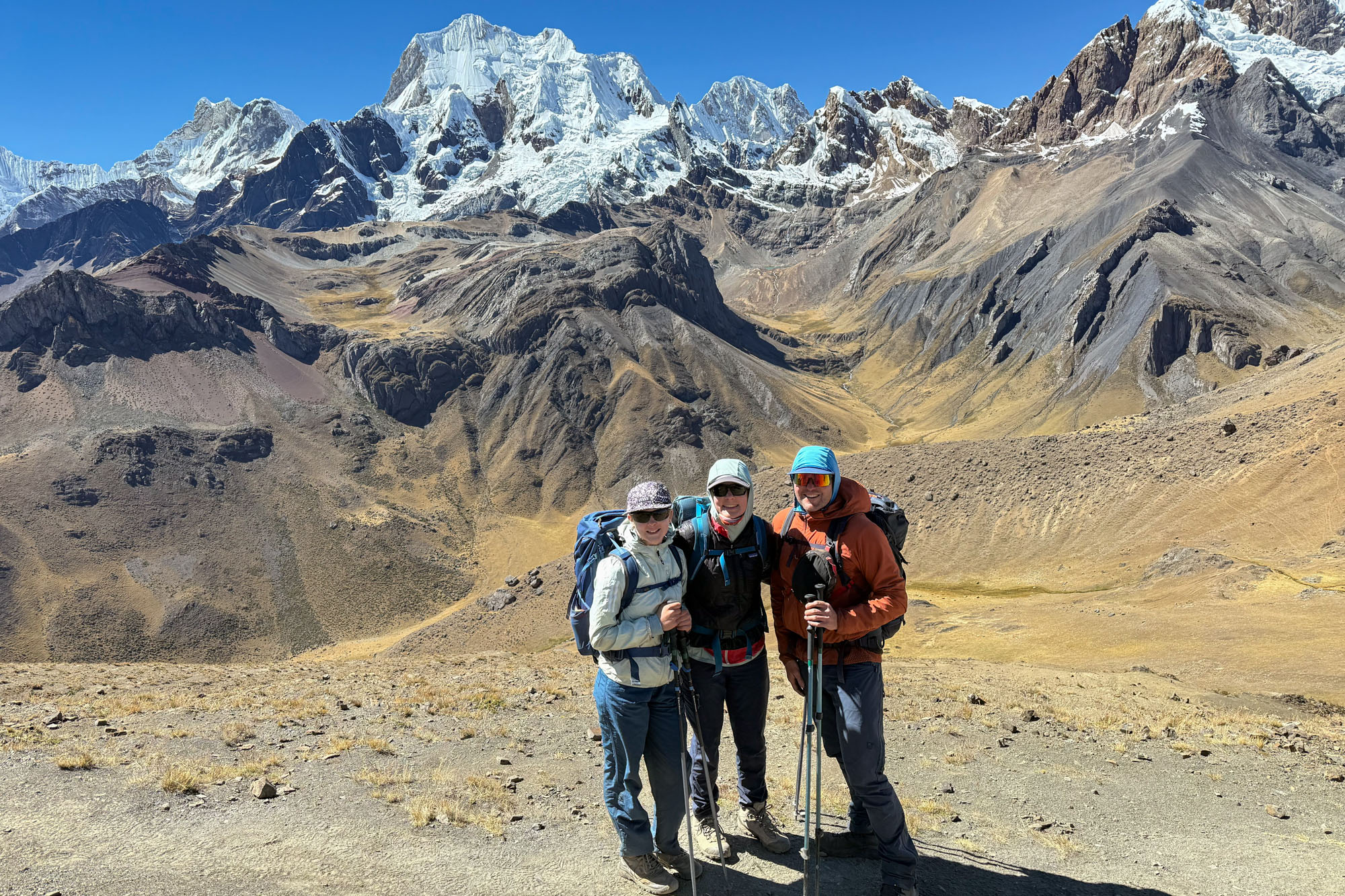
Descending from Cacananpunta Pass. Looking due south at (from left to right): Alcay (17,153′), Yerupajá (21,768′), Jirishanca (20,095′) and Ronday (19,259′).
Quartelhuain > Janca
We were up early the morning of our departure. 4am. Too early for everyone. The children (and adults) were tired and grumpy. Louis had some sort of stomach bug and looked like death. Our driver arrived shortly after 4 with Joel and Daniel and after a rapid round of introductions were piled into the van and left town. Every leg of motorized transport in Peru involves terrible roads and mixture of multiple stops and slow crawling mixed with bouts of breakneck speeds while passing vehicles on blind corners. The drive to the start of the Huayhuash was no different. Despite the early hour the traffic was already bumper to bumper and moving at a crawl. Once out of town the speeds picked up a little – but movement was still chaotic and after a while I began to feel sick and spent the next 6.5 hours trying not to vomit.
The roads got better and then worse and then better and then worse. The van ascended to 14,000′ and then descended multiple terrifying hairpin turns on narrow dirt roads to 8,500′ and then climbed back up again to 13,500′. 6.5 stomach turning hours. Unfortunately I had made the mistake of searching the keywords “Peru bus accident” prior to the trip so I not only spent the hours feeling sick but also tried to not think about the consequences of a tire veering too close to the side of the road.
After around 6 hours we reached the roadblocks that the villages have put in place so they can gather tolls from people driving to the start of the route. At one an old lady asked Joel how many gringo adults to which he answered “6 adultos, 2 bebitas” (6 adults, 2 baby girls). Isabelle who had been taking Spanish at school for several years perked up and was about to complain when instead the lady jerked open the van door to take a look at the children. Both Isabelle and Aven are pretty big for their age and the lady got a look at them and announced: “Son adultos, no bebés.” (Those are adults – not babies.) This became our trip mantra.
Finally we reached Quartelhuain (13,713′) – the start of our route. We piled out of the van and helped haul the bags to the burros and checked and rechecked gear and then we were off. A slow walk uphill below magnificent folded limestone with vibrant alpine meadows below us until finally reaching Cacananpunta Pass (15,300′) where we stopped for a snack.


Then descending 1,300′ down gentle slopes on the other side to Janca camp. The valley was broad with the high peaks of the Huayhuash glistening against the deep blue sky. The juxtaposition of the shining glaciers hanging in the sky against the bone dry dusty trail was hard to fathom.


Descending from Cacananpunta Pass. The views to our south were amazing.
And finally coming around a bend and seeing camp in the distance and setting up the tent as the temperature plummeted. No sooner had the tent been set up when we were called into the luxurious cook tent for a light dinner. Then back in the tent getting ready for bed only to called out for a second dinner. It turned out the light dinner was actually a late lunch. Second dinner was chicken and potatoes. And just when we were stuffed and ready for bed Joel bought in a cake. An actual cake. With frosting and sprinkles. We ate it and were stuffed.


Horses below the East Face of Siula Grande (20,814′) – the scene of Simpson’s Touching the Void. Simpson and Yates were descending the North Ridge (right skyline) when Simpson fell and broke his leg.
Janca > Laguna Carhuacocha
Up early and staring at the giant peaks directly south of camp. The mornings were chilly – usually hovering around 30 degrees without a cloud in the sky and the crisp clear air made for perfect vistas. We ate breakfast, packed up camp and were hiking by 8am.
This section of the circuit was an easy hike. Total distance between the two camps is 6 miles with about 1,2000′ of elevation gain. The route ascends a broad valley for 3 miles to a low angle pass at 15,100′ and then drops the same amount in the same distance on the other side. It took us an easy 3.5 hours with many breaks. Everyone was feeling great – but Joel told us to walk slowly and conserve energy since the nest day was quite a bit longer. So we wandered up valley slowly and took a long break at the pass.


The drop from the pass to Laguna Carhuacocha was stunning. Directly to our southwest the East Face of Siula Grande towered 7,000′ above us. Siula Grande is the peak made famous by Joe Simpson’s book Touching the Void. I read the 30 book years ago when I was first starting to climb. Seeing it in person 30 later was mesmerizing.

Down valley to the camp where we set up the camp and then wandered around the lake shore staring up at the peaks and eating and resting – trying to get our heart-rates down to normal.


Leaving Lagana Carhuacocha. The peaks above are Yerupajá, Yerupajá Chico and Jirishanca.
Lagana Carhuacocha > Huayhuash
This leg of the trek is considered by many to be the most scenic section of the entire circuit. The route hugs the shores of Laguna Carhuacocha until you turn south and hike up steep grassy hillsides past three deep blue glacial lakes until arriving at a viewpoint overlooking the valley and towering peaks. From the viewpoitn you climb another 1,000′ to gain Paso Siula (15,846′). A moderate descent off the pass leads to alpine meadows which you follow for another 3.5 miles to camp Huayhuash.
The big peaks above Lagana Carhuacocha. (More on Quechua nomenclature here.)


We left camp promptly at 8am. Most of the groups on the trip work up super early and were hiking by 7am which put them into camp by early afternoon. We had no desire to wake up early – and also little desire to get into camp early so we took our time walking. The weather was perfect and we lingered at the passes and walked slowly with no reason to rush.


We wandered around the lake in the still morning air and then walked up valley to where the trail veers south underneath Yerupajá and Siula Grande. The first 5 miles was easy walking with little elevation gain and the walls of the peaks rose 7,000′ above us.

Isabelle below the East Face of Jirishanca. I like this photo because it shows the scale of these peaks. Isabelle is 3 miles away from the peak and the summit is 6,000′ above. The sheer walls capped by seracs and fluted snow was captivating. Standing under it you can see why so many alpinist have been drawn to it for decades. The east buttress (the prominent rock buttress center right) was first climbed in 1957 by Austrians Toni Egger and Siegfried Jungmei. In 2022 Vince Anderson and Josh Wharton climbed a new route that ascends the center of the lower buttress and then gained the ridge. Patagonia made a fantastic movie about the ascent which can be watched here. While we were in the Huayhuash Arnold, Huber and Geitl climbed a new incredibly difficult route that ascended the buttress directly. They turned a few hundred feet short of the summit on what they claimed was the “East Summit”. Climbers – who love a good controversy – were quick to pick up on this and copious articles were written about what defines success.
After 4.5 miles the trail rose steeply and we ascended 1,500′ in less than 2 miles. The climb was steep – but we went slowly and the children plodded along at a slow, but steady, pace. Unfortunately once we started climbing the clouds rolled in and the tops of the peaks became obscured so we didn’t get the perfect bluebird vista from Mirador Tres Lagunas that is on every Huayhuash postcard. Above the viewpoint the angle eased off and it was easy hiking until the final 200′ push up steep rock ledges to Paso Siula (15,846′).


The descent off the pass was moderate hiking. A couple hundred feet of switchbacks and then low angle dirt paths for the next 3.5 miles. To our west the wall of high peaks continued: Carnicero (19,553′), Jurau (18,615′) and Trapecio (18,582′). To our east the peaks gave way to rolling hills that transformed from brown to green in the distance.


One thing I was surprised to learn was that the predominate winds and moisture come from the east. In Alaska where moisture is funneled to land by ocean currents – a pattern I routinely study in the hopes of predicting high pressure windows. In South America prevailing easterly winds push air up and over mountains and the high altitude chills the air, causing moisture to condense and fall as rain or snow. On the west coast the cool ocean current of the Pacific, known as the Humboldt Current, contributes to the aridity because ocean waters do not produce a great deal of precipitation. This makes for a dramatic landscape with green valleys in the distance and arid desert like landscape beneath glaciated peaks.


We dropped – descending 1,300′ until finally dropping off a plateau and down to a camp surrounded by stone walls and shepherd huts. The below photo gives a good view of what to expect on this trip. Wild camping is prohibited without a special permit and everyone is herded into tight camps that usually have shepherd huts where locals stay during the trekking season so they can collect the fees. Each camp will have several guided groups complete with 8-10 trekkers, a guide, cook and arrieros. Likewise each camp has several independent trekkers with their own tents. Thus about 30-40 people at each camp. Not a wilderness setting – on the other hand the land outside the camps tends to be quiet and you never see isolated tents or bands of distant campers. The campground have running water and flush toilets. I was a little surprised to see flish toilets and running water, until I read in Kim MacQuarrie’s Last Days of Incas about how the conquistadors discovered running water in the cities and temples in 1530.

We reached camp just before lightening storm rolled through. We quickly set up the tents and were served hot drinks. That night we had steak for dinner and crawled in our tents just as the temp began to plummet.

Isabelle descending from Paso Trapecio. In the background is Laguna Darwincocha and Nevado Puscantrurpa (18,543′).
Huayhuash > Huanacpatay
The next morning we held a team meeting and Joel gave us options for the trek. Initially we had planned to continue traversing south to Viconga where there are hot-springs – however Joel said that would make the subsequent days really hard for the children. Instead he suggested we cut off a day by ascending Paso Trapecio due west of camp. This would give us an extra day which we could use to break up the long days. While none of the days had been particularly hard – we were apprehensive about the original plan (which would have been a 12 mile day with 5,000′ of elevation gain / loss) so we were happy to break that day in half.


We left camp promptly at 8 and began the slow march uphill. It was misty and cool, but the clouds were lifting so we weren’t too concerned about being caught in weather up high. The ascent was low angle – we gained 2,500′ over 4 miles – and most of the trail was easy walking. Down low we passed through meadows with shepherd huts built of mud and stones and thatched with grass. While the huts looked ancient, most had relatively recent repairs and were obviously still used.

Isabelle beneath the South Glacier of Trapecio. When we passed through here the top of the peak was obscured by clouds so we couldn’t see the hanging seracs 2,000′ above our heads.
We ascended grass meadows until about 15,000 where the terrain transitioned to mostly sand and stone with tiny patches of grass. In font of us loomed the jumbled seracs. The route traversed beneath the glacier before turning sharply and ascending a band of red rock to gain the 16,463′ pass.


Paseo Trapecio (16,463′) was the highest elevation we reached on our trip. It was cold and snowing lightly and no one was feeling particularly energetic – so we did not linger for very long. Over the pass and down the steep rocky trail. The landscape changed dramatically on the other side of the pass. Where the east side of the pass had been moist with a large glacier, the west was an arid and barren high-desert landscape. Aside from scattered patches of moss there was no vegetation – just colorful bands of rock and deep blue alpine lakes.
The trail on the west side was initially steep but after a couple switchbacks it leveled out and we wandered through the arid landscape looking up at small glaciers clinging to the tops of the peaks. It was a surreal beautiful zone.


A leisurely 2 hour hike downhill and we crested a rise to look down on Huanacpatay valley and Campamento Elefante (named after due the rock formation at the head of the valley that looks like an elephant trunk). A steep descent took us to a beautiful camp in a high alpine field surrounded by craggy peaks.


That evening I took a walk to the head of the valley and scrambled up Elephant rock. It was a quiet still evening and the clouds burned away for a perfect sunset.

Looking North from Paso San Antonio. The large peak in the center is Rasac ( 19,741′) and the peak center right is Sarapo (20,102′) – from tsarap (to grasp) indicating the need to hold fast to the paths in this region. The lake center left is the where Simpson’s base camp was – and the glacier above the lake is what he crawled down.
Huanacpatay > Paso San Antonio > Huayllapa
This day began with an ascent to Paso San Antonio (16,618′) for a look down into the Juraucocha valley and the backdrop of high peaks. We then retraced our steps back to the valley floor and hiked out Huanacpatay valley – dropping 4,500′ and 12 miles through multiple ecosystems to the small village of Huayllapa. The day had everything from stunning high altitude vistas, a condor sighting, hiking along ancient walls and huts to a steep descent past huge waterfalls and into a tight valley with terraced fields. This was the highlight of the trip for me – and it was one of the better hiking days I’ve ever had.
We left camp promptly at 8 and trekked across the tight valley and immediately began the climb up to Paso San Antonio. The ascent was moderate and we hiked up 1,500′ to the pass in a little over an hour. At the pass we looked down at Juraucocha valley and at the peaks and glaciers beyond. In the distance we could see where the Simpson base camp was, but didn’t get any closer. People who have a couple extra days typically climb up and over the pass and spend a night or two at Juraucocha which sounds like a wonderful side-trip. Unfortunately high clouds were covering the tops of the peaks so we couldn’t see the south face of Siula Grande.


Some parties descend the north side of the pass and hike out another valley to Huayllapa – however Joel said the trail was steep and not kid friendly so we opted to turn and drop the trail we came up and sidehill across to Elefante rock where we could gain the trail leading down valley.


After reaching the valley floor again it was five miles and 500′ down a low angle tight valley until we reached a constriction where the trail dropped steeply. The trail then became a series of extremely steep switchbacks and dropped another 2,500′ in 4 miles to the valley floor.


The valley was stunning. At the head the valley was wide and we hiked though short scrubby grasslands with shepherds tending to herds of sheep. A little further the valley tightened and the valley was strewn with large rocks scattered about. Further down the valley floor was lined with ancient walls and mud huts to constrain the cows, sheep and mules from wandering off. As we dropped into Huayllapa valley we began to pass large cactus and eventually terraced fields that were irrigated by a complex system of water pipes snaking down valley. Finally we reached the village of Huayllapa, a small village tucked between steep slopes Located at 11,790′ the village a nice central plaza and their own hydroelectric plant and a population of around 400. They have a primary and secondary school. Our campsite was in the local football field next to the school. The village kids ignored us and kicked the soccer ball around our tents till dark.

Hiking below Nevado Diablo Mudo (17,552′) – the “Mute Devil”. This peak is one of the few peaks in the region that has a moderate route to the summit.
Huallapa > Gashapampa
While the previous day had been the trip high point – this day was the trip low point. Isabelle was feeling nauseous and she walked really slowly – and it was hot and dusty. We hiked almost 10 miles and climbed a little over 4,000′. It was a long day.
In the early morning the trail was shaded and the temperature about perfect. The route climbed steadily right out of town – and it would consistently stay steep for most of the day. We walked past terraced fields and then followed a deep steep canyon with Tufa limestone walls above us. We were in the shaded canyon for about 2000′ before finally climbing above treeline and into the alpine.


Once in the alpine the views improved but it remained hot and dusty and Isabelle continued to feel nauseous. The upper valley finally opened up with nice views of a lake surrounded by high peaks. The trail we were on bordered the Huayllapa Private Conservation Area and the village of Huayllapa was building a fence to separate farming zones to the west from the protected lands to the east.


The dynamics of conservation and land ownership in this region are very interesting: the Huayhuash is broken into four Private Conservation Areas: Huayllapa, Jirishanca, Llamac, and Pacllón. Each zone is managed individually by those communities who in turn do things like manage the campsites and collect fees. That said – “Conservation Area” is a loose terminology. The villages that run the conservation areas also partner with mining companies who are active in both exploration and development in the region. The Diablo Mudo Exploration Project run by Peruvian-owned Compañía Minera Raura is located at the base of Nevado Diablo Mudo and has been exploring for copper, lead, silver, and zinc since 1995. The property in question is currently under litigation due to unclear property lines.


We continued up-valley – passing by a small mining operation just off the trail and eventually traversing across the long low angle Tapush Paso (15,659′) before finally cresting the drop-off an looking down at Gashapampa camp. A quick descent down to camp followed by dinner and a fitful nights sleep at 14,840′.

Night time at Jahuacocha camp.
Gashapampa > Laguna Jahuacocha
This was our last real day of hiking. Tjhe day started out with a drop off the high plateau where Gashapampa sits and down into a tight valley before gradually ascending 1,600′ to Yaucha Punta where we gained a pass that would take us to our next camp. Isabelle was feeling herself again so we moved quickly – too quickly for my taste. The valley we hiked through before ascending the pass was beautiful and I would have liked to linger longer and explore further back. Thus is the nature of a good trip… just when you start feeling great and comfortable it’s time to go home . We hiked 3 1/2 miles with 1,600′ of ascent to Yaucha Punta (15,875′) where we turned and followed a high ridge with amazing views of the camp and lake below and views of the big peaks that make up the core group of the Huayhuash region.
Across the ridge with multiple stops for photos and gawking. The massive West face of Yerupajá rose above a foreground ridge. Yerupajá was first climbed in 1950 via the Southern flank of West Face by Jim Maxwell and Dave Harrah. Initially they had hoped the gain the Rasac / Yerupajá col and climb the Southwest Ridge – but the ridge was too sharp and corniced so they opted to climb “on the face, parallel to the ridge, tortuous and exposed, but fairly easy on hard snow.” They climbed the face, bivied on the ridge and then gained the summit. On the descent a small section of snow gave way below Harrah and he was “pitched over the western precipice”. The entire rope-length lay coiled on the ridge and Harrah fell 150′. As he fell Maxwell had time to grab his axe and throw himself prone on the ridge top. Miraculously the rope cut into the cornice and acted as a dynamic belay and Maxwell was able to hold the fall.
The stretch in the nylon had absorbed much of the shock; his ribs had absorbed the rest. Atop the ridge, Maxwell had been jerked forward three times. Between two of the jerks, he had had to pull out his axe and drive it in again farther forward. A fourth jerk would have pulled him over, for by that time his hands were six inches from the edge. All of this had taken place in less than three seconds.
“Slack!”
“I can’t help you.”
Looking down, Harrah could see the sunlit ice flutings ending in an overhang a hundred feet below; beyond the overhang he could see only the glacier, already in shadow, 4000 feet below. With an automatic desperation, he dug his two axe-claws into the ice and began working upward, sometimes without footholds, sometimes able to place his crampons on opposite walls of an ice fluting to rest for a moment or to stem upward. In about 45 minutes he reached the crest of the ridge, rather tired and expecting to cough up his ribs, piece by piece.
– Up Yerupaja by W. V. Graham Matthews and David Harrah. AAJ 1951
After regaining the ridge they continued down again. A little while later another section of cornice broke and Maxwell narrowly avoided taking a fall. They continued down until they could go no longer at whioch point they bivouacked in an ice cave. Both men had icy feet and they warmed their toes over a candle. The next day they were able to safely descend and return to base camp. A few days later they made it to Lima and checked in at a hospital. Harrah lost all his toes and Maxwell, half of three toes.


Our afternoon was a bit less exciting. We hiked across the ridge with children while gawking up at the high peaks. We at lunch and watched for condors and chatted with Joel – who assured us we would see a condor. When planning Chris had said he’d send us with Joel because we didn’t need a guide but we would appreciate a cook. Joel turned out to be so much more than our cook. He cooked and brought us hot water bottles before bed, he guided us to the correct trail every morning (and would appear out of nowhere and shout the second someone started down a wrong path), and he was so patient with the children (and our poor Spanish). If you’re looking for logistical support on the Huayhuash track him down. You can find him on Instagram but it would be easier to contract with him through Chris Benway / La Cima Logistics.
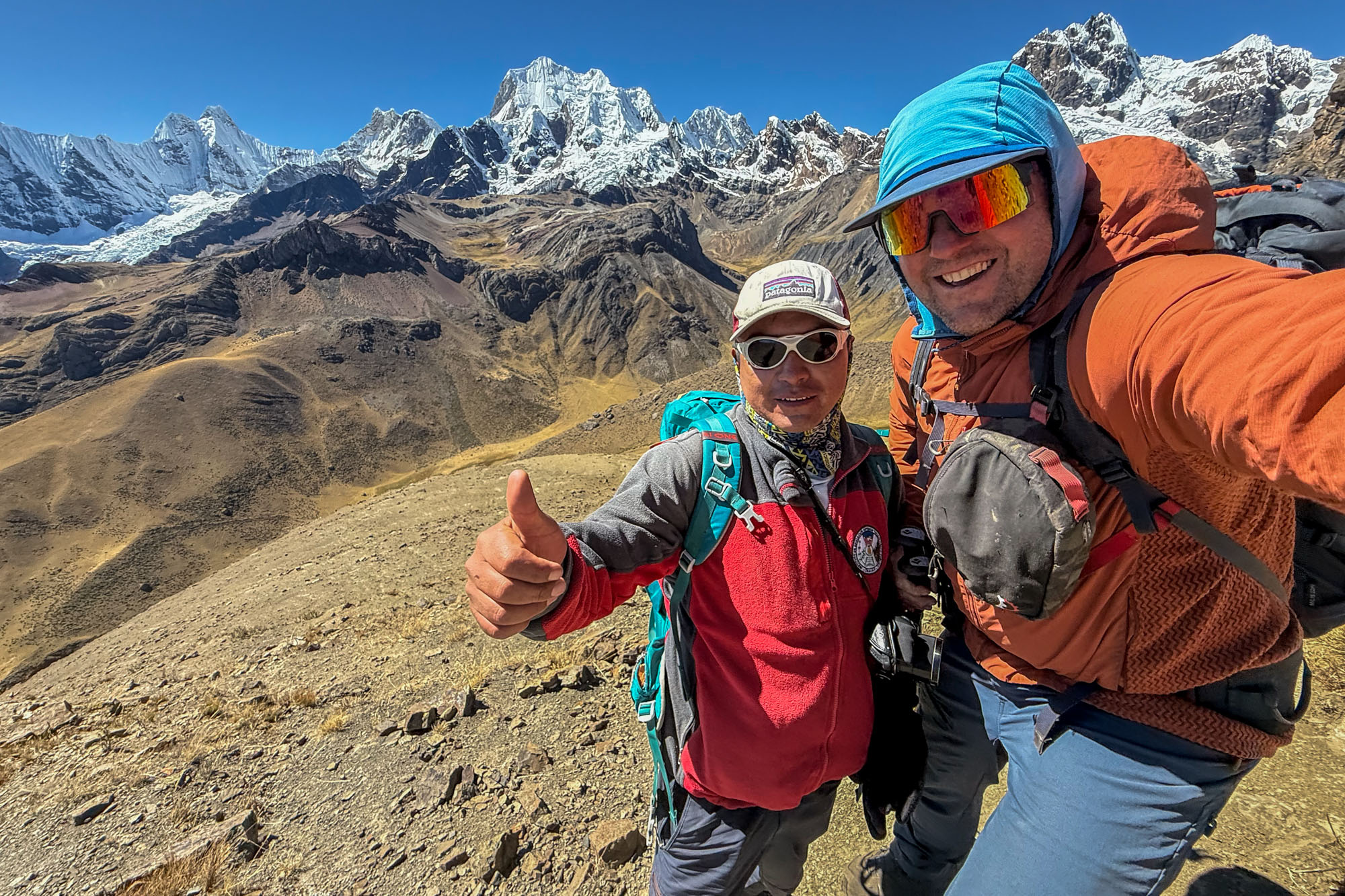
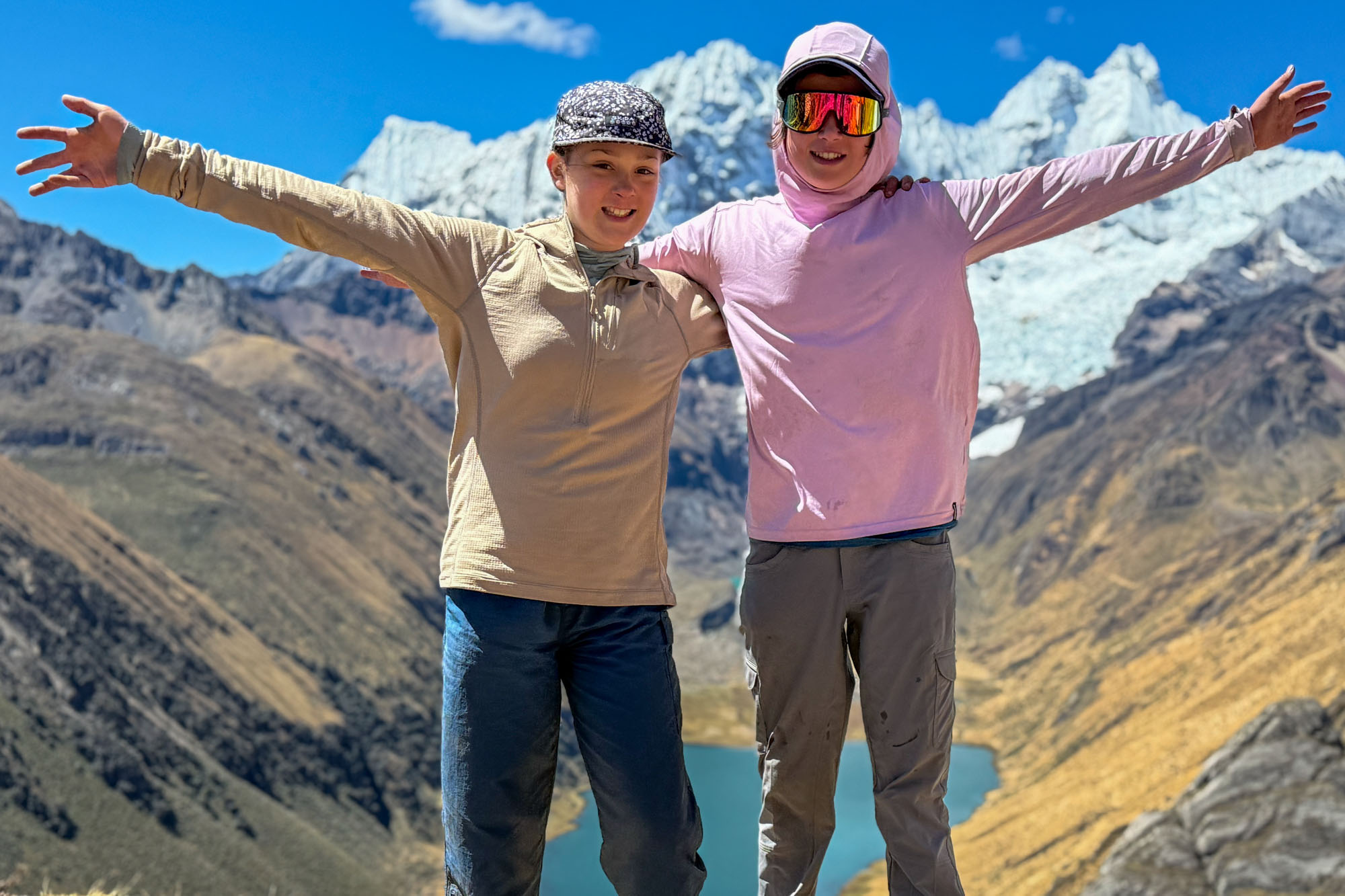
Across the ridge till we could look down at Laguna Jahuacocha and Campamento Incahuain – our last camp of the trip. On the ridge top we hung out for a while hesitating to drop out of the alpine. Joel told us it was a perfect day… except we didn’t see any condors. I was a bit disappointed at that. We had seen a condor a couple days previously – but it was way away and barely recognizable.

A few minutes later Joel started yelling and pointing “CONDOR!!!”. The giant bird flew over our heads close enough to see the furry white ruff at the base of its neck. It soared over our head and then came back for another lap. Joel was pumped. “Hoy es un día perfecto” he announced (Now it’s a perfect day). The condor flew off and we continued down. A few minutes another flew by. And then another. In all we watched a half dozen condors catch thermals above the lake and soar down-valley.
Down we went – the trail steep and dusty. Passing by steep limestone walls. Isabelle asked if we could climb them and I answered her in butchered Spanish: “Sí, pero no sin ropa” which translates to “Yes – but not without clothes.” Ropa means clothes. I should have said cuerda for rope. Joel thought this was hilarious and almost fell over laughing.


The steep dusty trail dropped 2,500′ to the valley and then a short walk to camp where we set up our tents, ate popcorn (a Joel specialty) and stared at the mountain. The camp is all of two miles from the road so lots of travelers visit the camp for 1 or 2 nights. It was busy and crowded. After a short break we hiked out a point on the lake with intentions of jumping in the lake. I made it to mid-thigh and decided it was too cold. Isabelle and Aven fully dunked themselves.


Dinner and then in bed. For the first time on the trip I felt good enough to where I didn’t want to go to bed right away. I stayed up late taking pictures. The Milky Way was so clear I felt like I could touch it. The Huayhuash was pulling me in.


Last views of the Huayhuash on our drive back to Huaraz.
Laguna Jahuacocha > Pacllón
Up early and out the next day. It was a short 2 mile walk to the van. The weather was perfect and the clouds crisp and clear at our backs as we walked down valley.


A quick transfer of the gear from mule to van and we were off. The van ride was terrifying. At times the engine block would swing out over the side as we took tight corners. I was sitting in the front seat trying not to look down but also peering out the window every chance I got. Down the valley we went. Dropping from the 13,500′ Incahuain camp to the town of Pacllón at 10,500′ and then twisting our way down dirt roads all the way down to 8,500′. Then back up more twisting turning dirt roads and all the way back to Huaraz for a final night before returning to Lima.

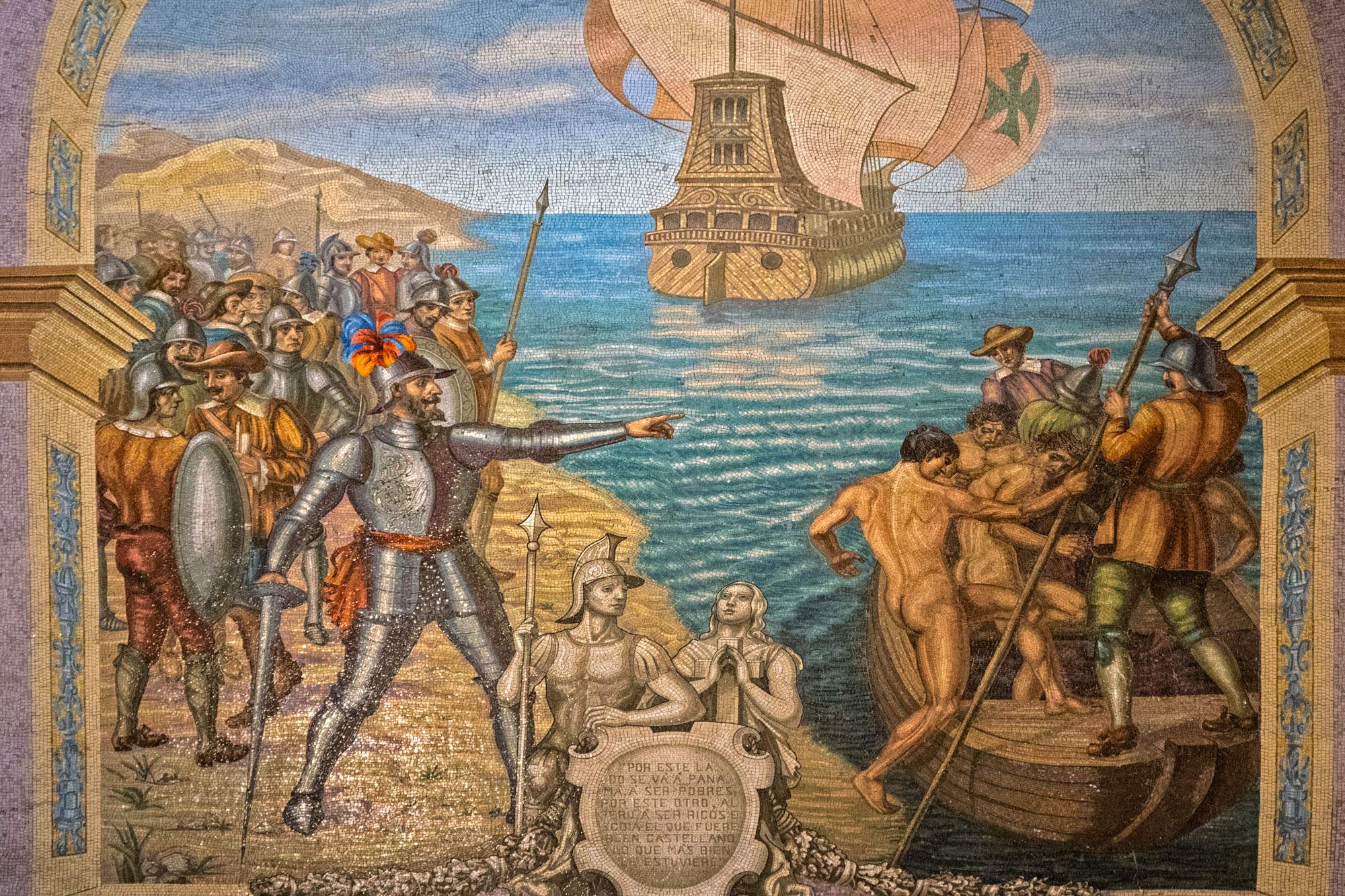
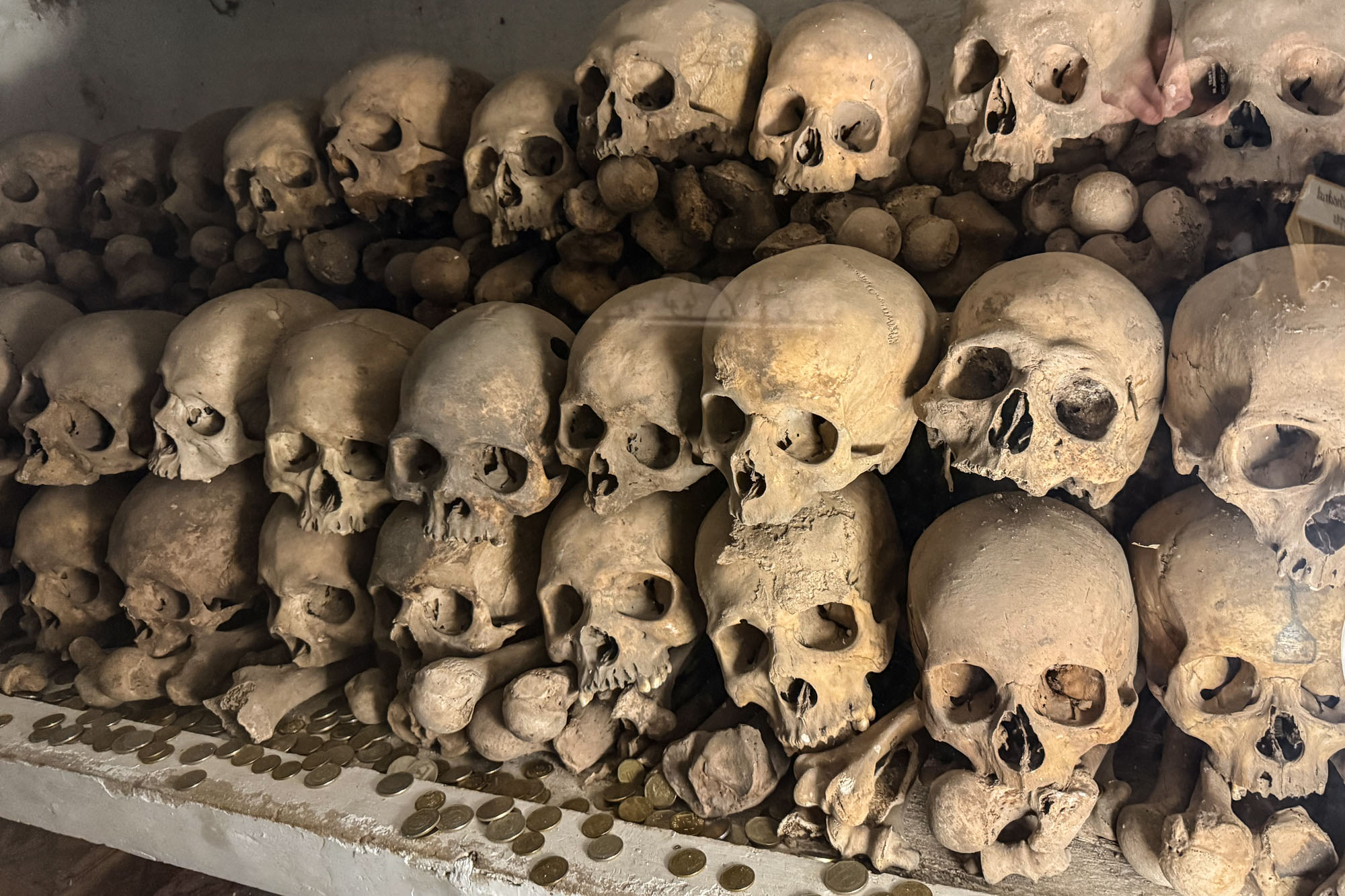
The bones of Francisco Pizarro in the Lima cathedral. While traveling in Peru I read Kim MacQuarrie’s Last Days of the Incas where he described again and again the grotesque brutality of Pizarro. Reading that book and then visiting the cathedral to discover a shrine to Pizarro was a shock.
Afterwards
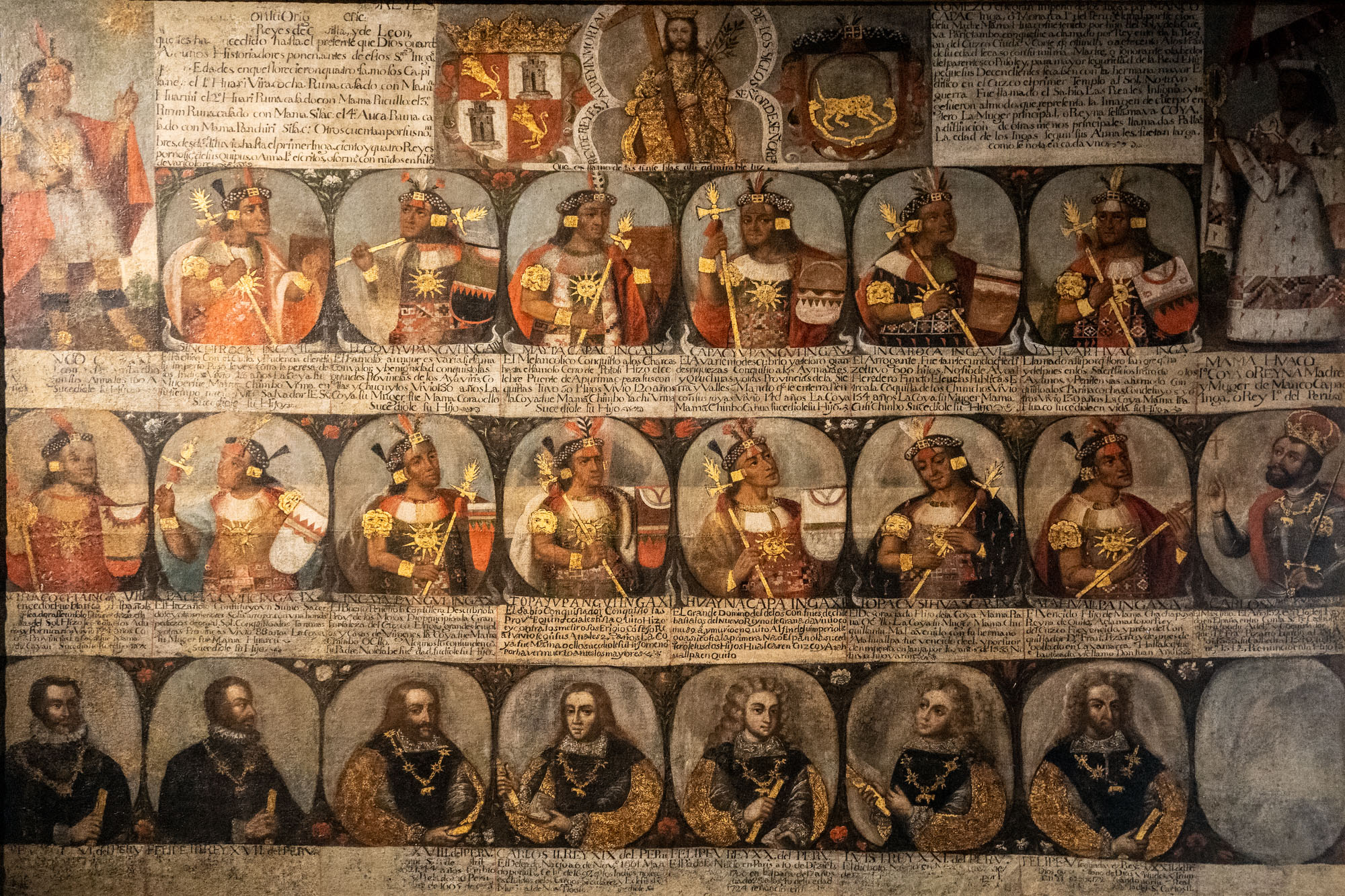
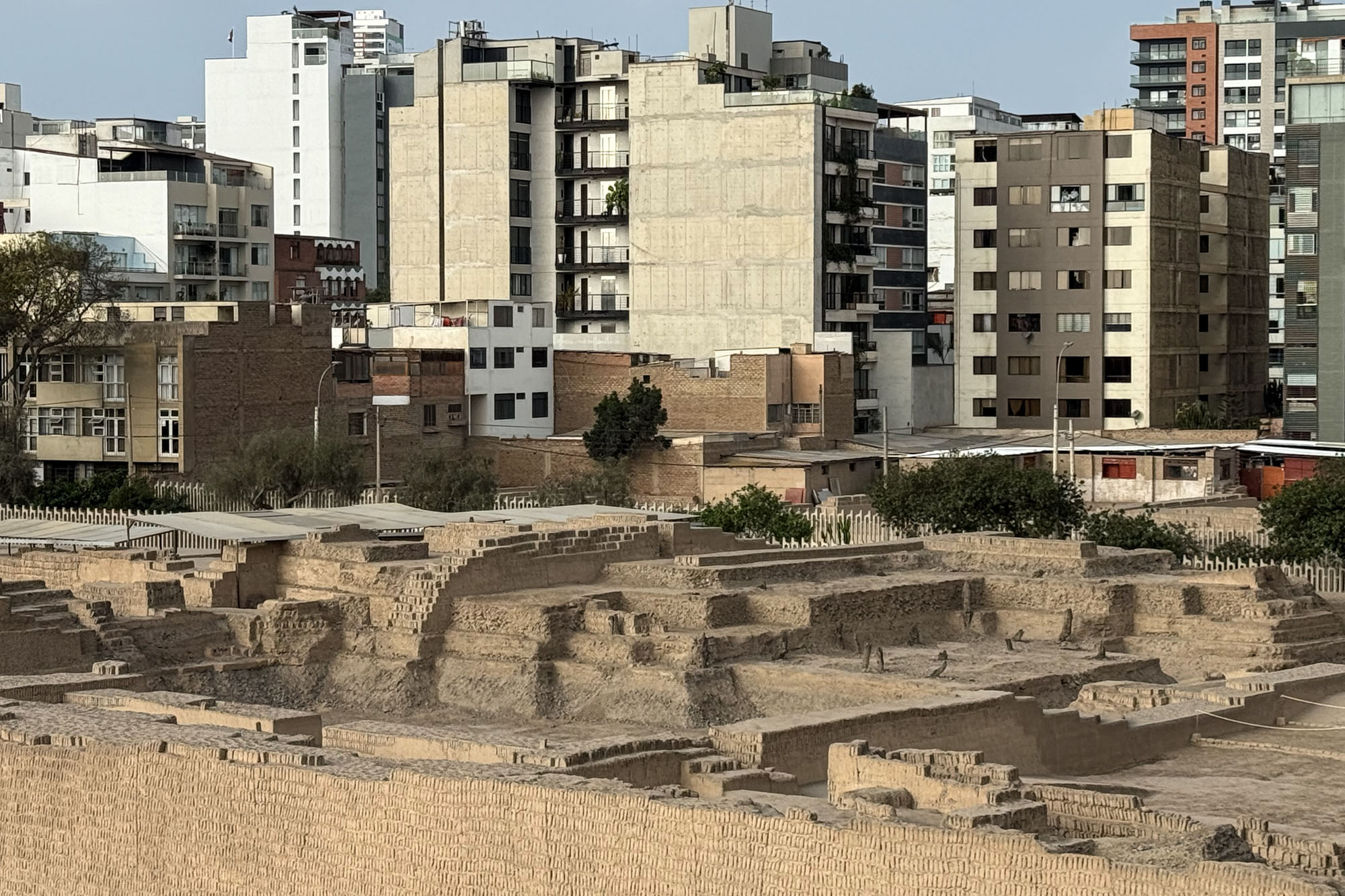
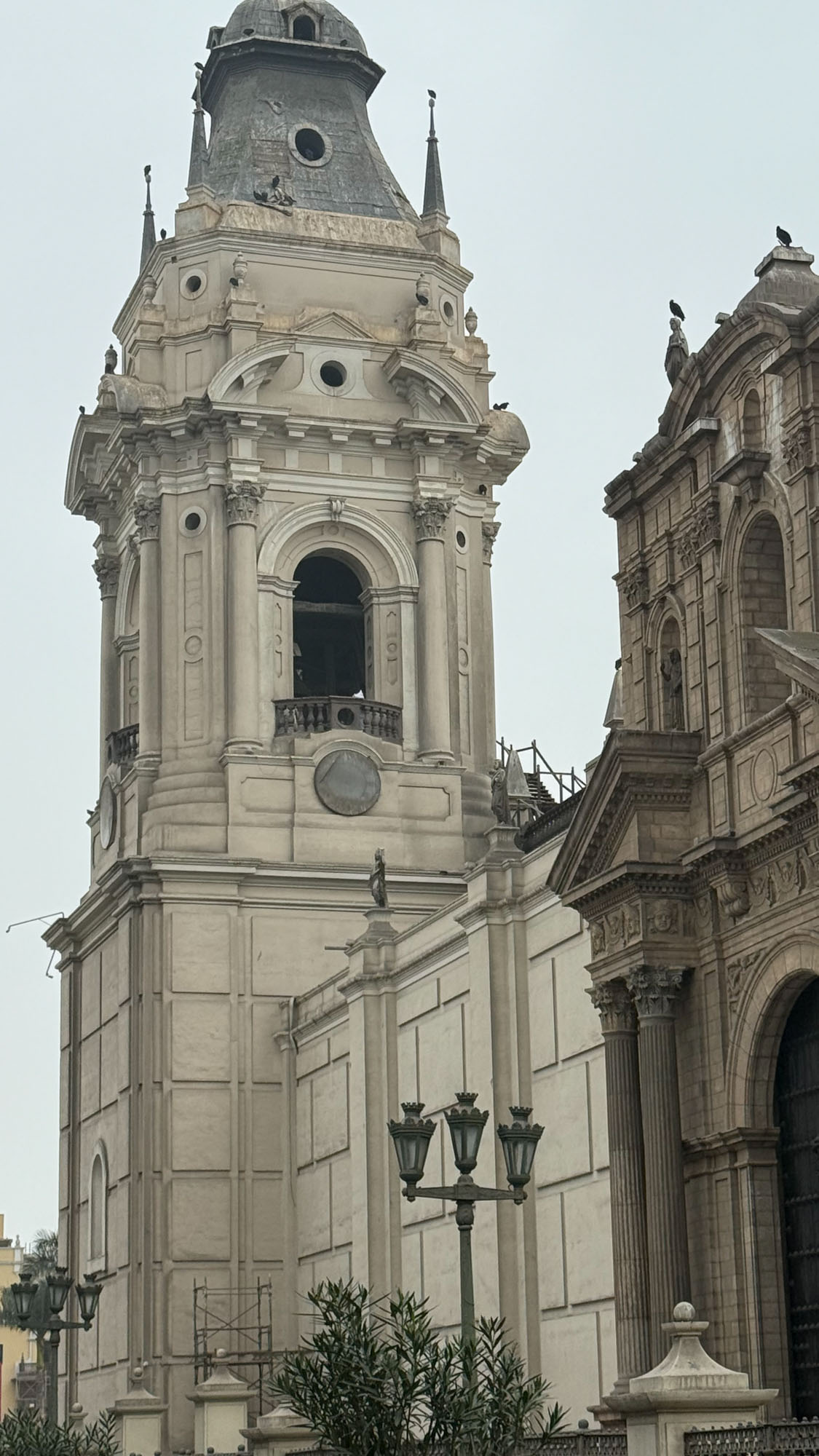
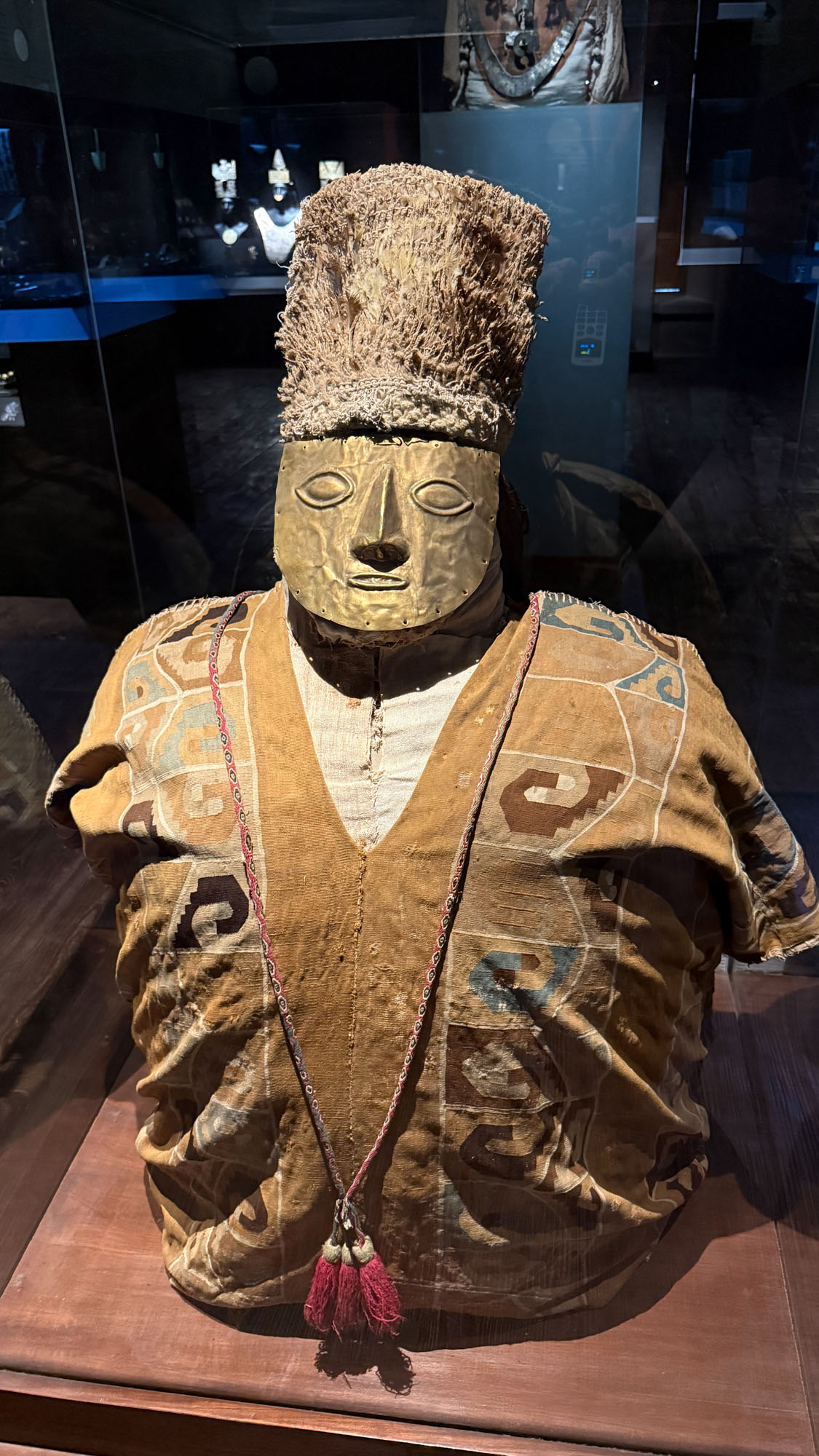
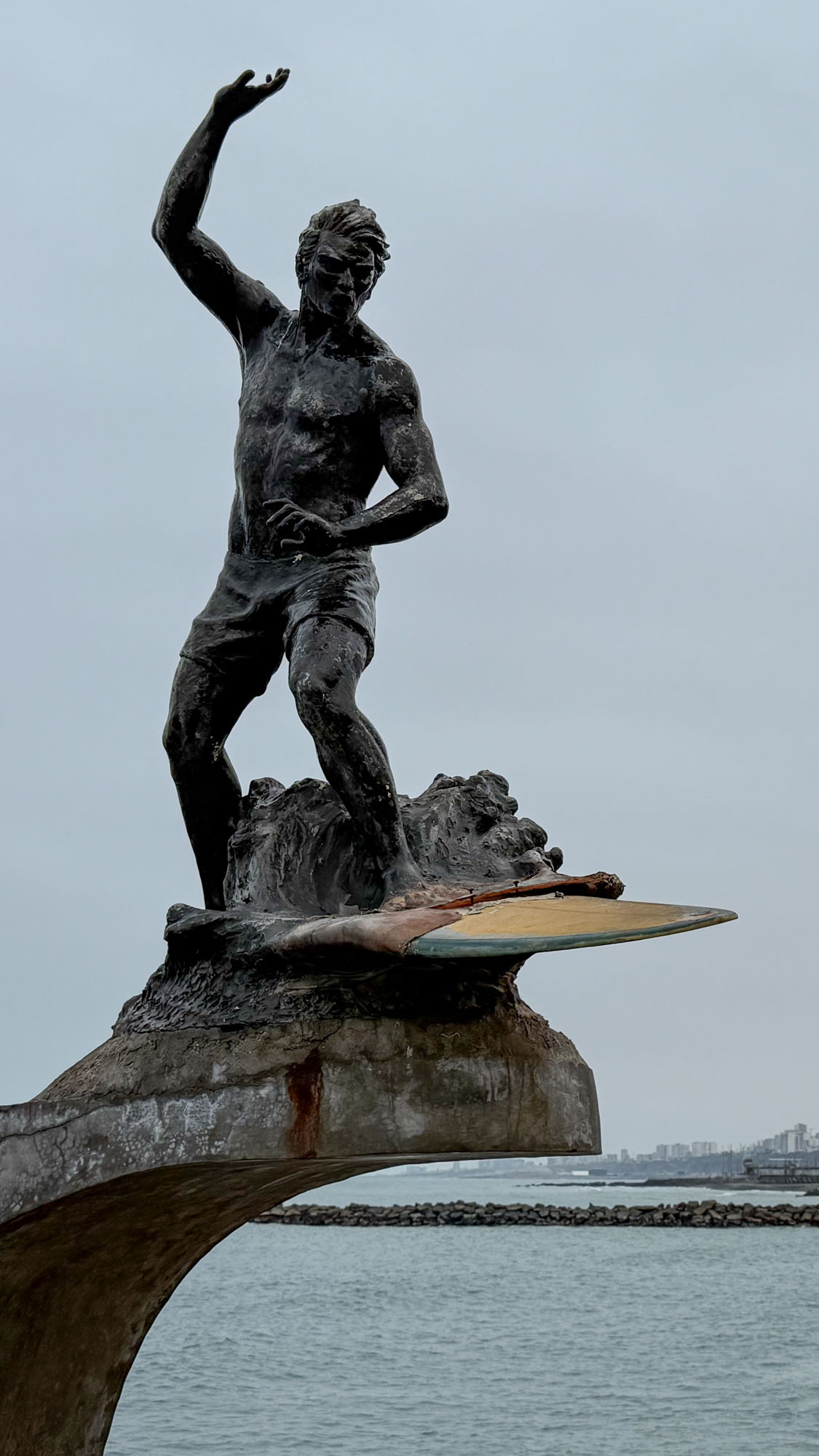
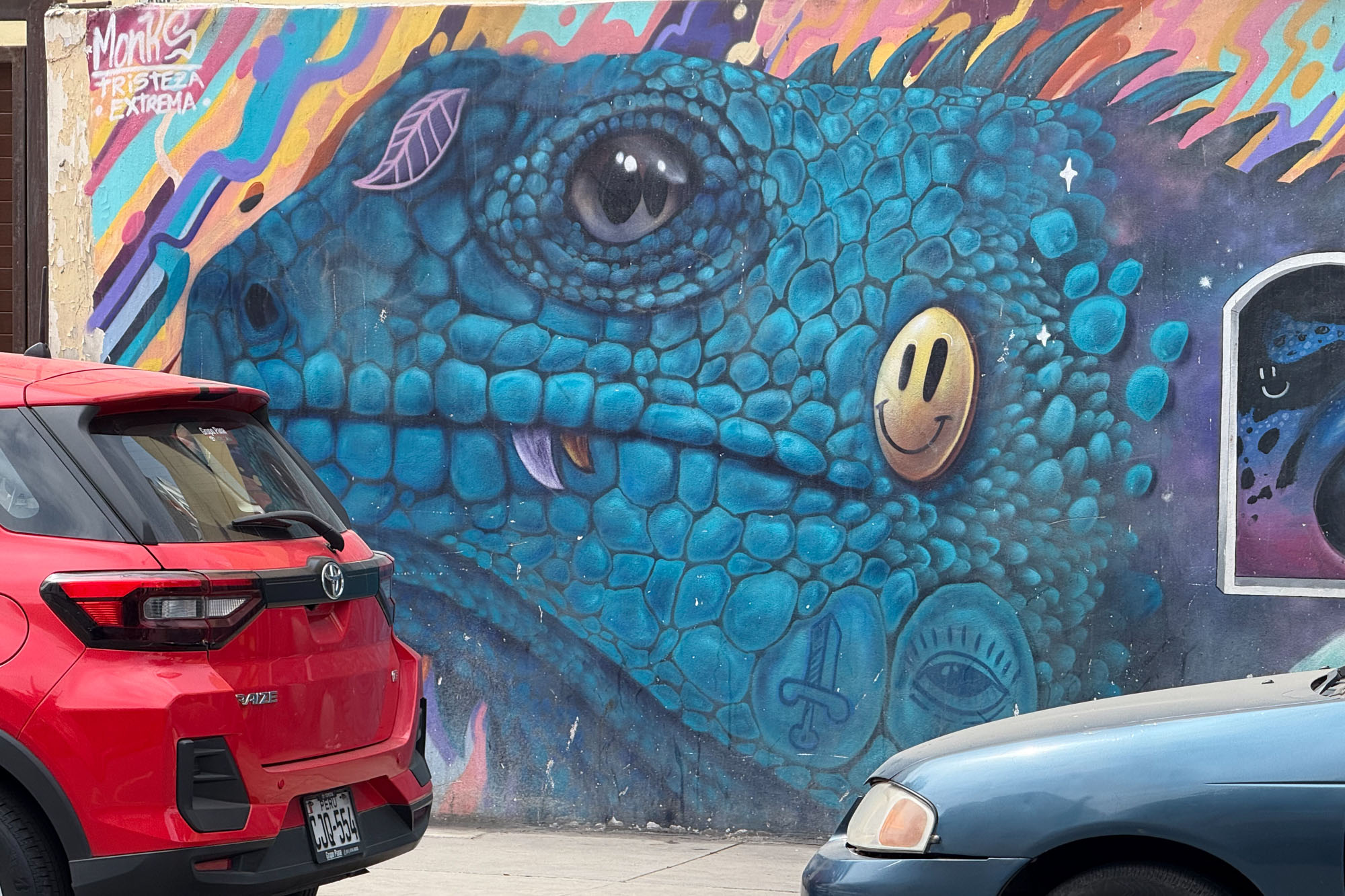
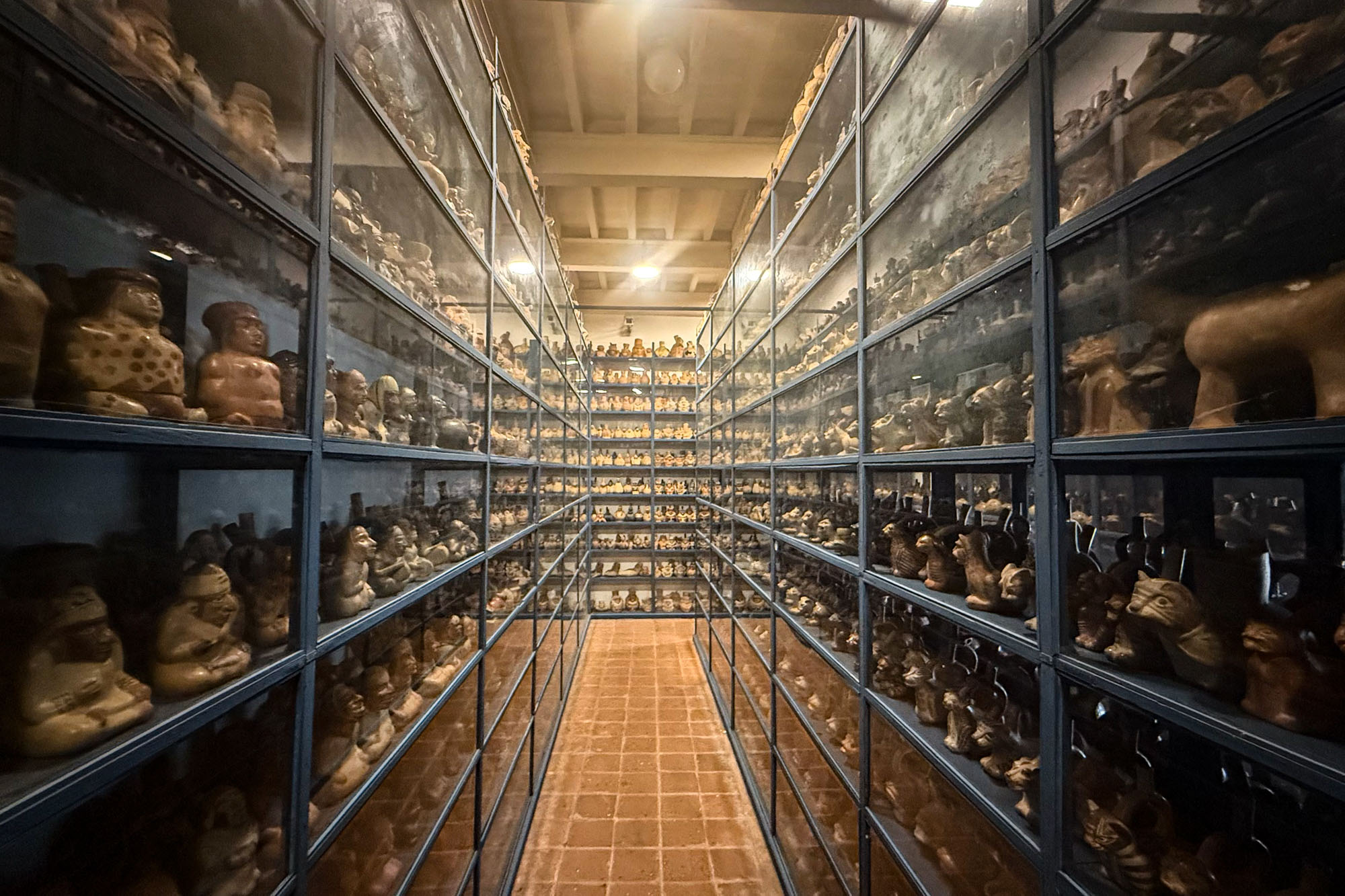
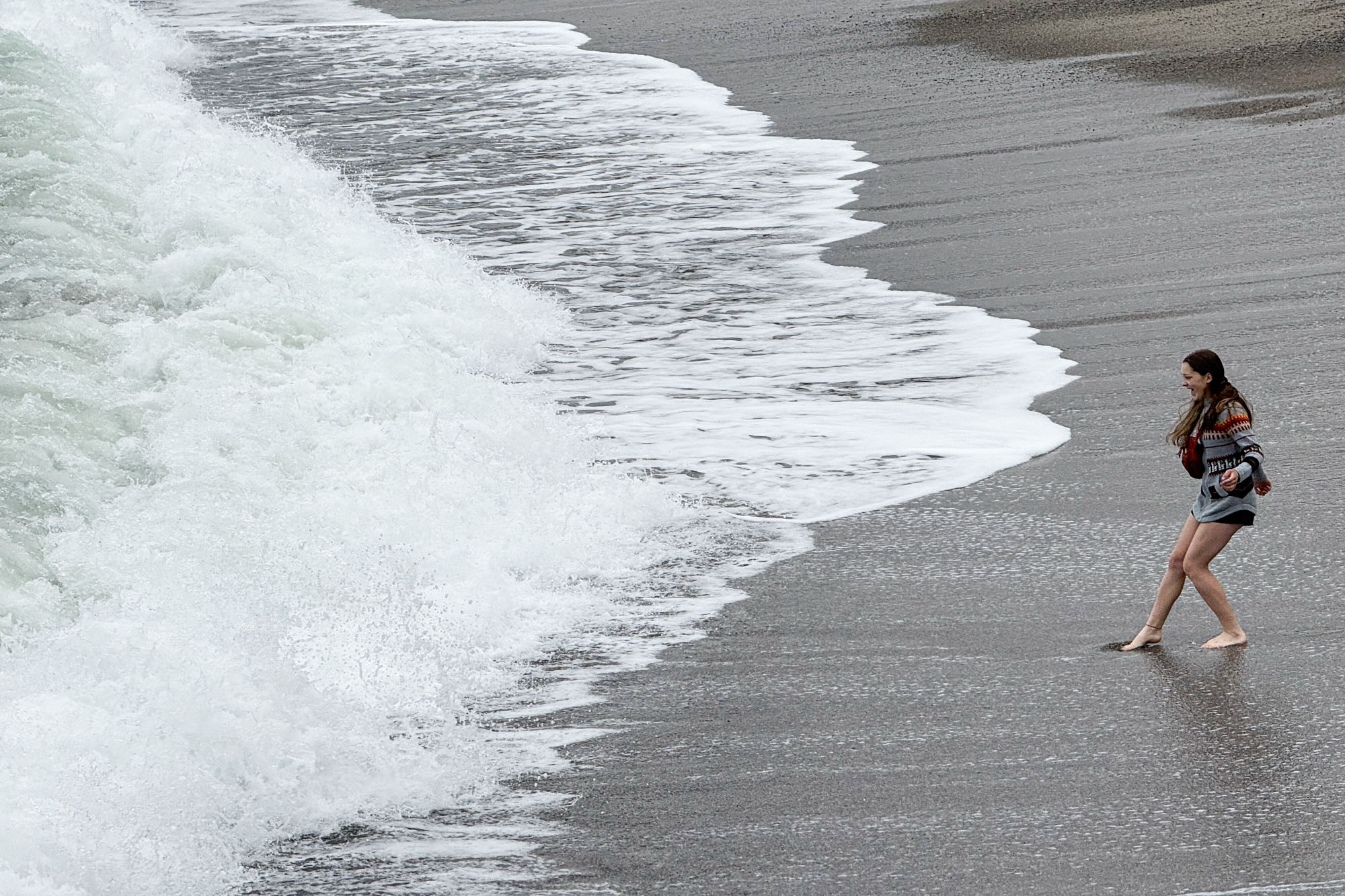
A transfer to Lima where we stayed in a charming hotel in Miraflores with a couple days of playing tourist. Museum visits, shopping, eating at great restaurants (according to the NYTimes the best restaurant in the world is in Miraflores). We toured the Larco museum, the Lima cathedral and Huaca Pucllana. We haggled over sweaters and alpaca rugs, ate dim sum for lunch and at night sipped drinks in trendy nightclubs. Isabelle, who had gone swimming in the northern Atlantic in June, dipped her toes in the southern Pacific in July. Then into a taxi and onto the plane and flying north dreaming of where to go next.

Resources
Logistics & links:
- I highly recommend Chris Benway / La Cima Logistics. His planning made our trip super easy. He works with Joel regularly so you can be sure to have good help.
- Upon arrival we stayed at the Holiday Inn near the Lima airport. It’s not a great hotel but it’s close to the airport. Going anywhere in Lima is an hour commitment due to heavy traffic so it was nice to be close.
- You can get to Huaraz via bus/van or plane. The bus/van takes 8-10 hours. Lots of people take the overnight bus – which is cheap and allows you to sleep. The plane takes an hour. If I were to go again I’d probably cough up the money for a plane ride.
- For the trek we brought enough Diamox for 4 people, 3 doses of antibiotics and 2 doses of Dexamethasone. 4 people ended up going on Diamox and we used all 3 doses of antibiotics. High altitude and cook tents are incubators for respiratory infections so I would suggest enough for every other person. You can buy Diamox in Huaraz and it’s pretty cheap, however bring your own Dex, antibiotics and pain killers.
- Bring your own electrolytes to Peru. We didn’t find any in the local grocery stores.
- We brought winter sleeping bags and a summer tent (Big Agnes Copper Spur 4). I used a -5 Western Mountaineering (Antelope) which was perfect. Yvonne used a -15 Western Mountaineering (Lynx) but she sleeps cold so the extra warmth was good for her. Isabelle used a 0 double Big Agnes bag. She tosses and turns a lot in her sleep so a double bag was not ideal and she was chilly.
- The FB group Mountaineering & trekking in Huaraz has a ton of info.
- This page has an excellent GPX file. She charges $30 for it – but she put a lot of work into it with good notes. Alternatively you can download this one with basic info. The alpine route GPX file is here.
- Louis hauled a giant lens. His excellent photos are here.
Recommended Reading: I read a lot about Peru both before and after this trip. Below are recommended books.
- The Conquest of New Spain by Bernal Díaz del Castillo. Technically this is about Cortés and Mexico and technically I read it 28 years ago when I went and climbed volcanoes in Mexico – but it’s an important historical read for anyone visiting South America.
- The Last Days of the Incas by Kim MacQuarrie. This really is an amazing book. MacQuarrie’s research and his commitment to researching written Spanish records and oral Peruvian records was amazing. In the preface MacQuarrie writes “All a historical writer can really do, to the best of one’s ability and within one’s own time, is to momentarily lift from the dusty shelves of centuries these well-worn figures-Pizarro, Almagro, Atahualpa, Manco Inca, and their contemporaries clean them off, and then attempt to breathe life into them once again for a new audience so that the small figures can once again replay their brief moments on earth.” I thought that was telling way to describe this book.
- You Dreamed of Empires by Alvaro Enrigue. This is not about Peru – but also about Cortés and Moctezuma. It is postmodern historical fiction depiction of the meeting of cultures and empires. While it wasn’t about Peru I think it is pertinent because it ventures down the what-if trail of historical conquest and had Mexico turned out differently Peru would be very different. This was the best book I read in 2025. Highly recommended!
- Death in the Andes Novel by Mario Vargas Llosa. This is a macabre surreal tale about the Sendero Luminoso and Peruvian vampires and mudslides. It is difficult to read and gave me nightmares. However – given that the Huayhuash region was a hotbed for Sendero Luminoso separatists, it makes for pertinent and important reading.
- Touching the Void by Joe Simpson. Simpson’s amazing epic from Siula Grande. Require reading for anyone doing the Huayhuash! There’s a movie which is supposedly good, but I never watch the movie if I like the book so I can’t comment on it.
- Bel Canto by Ann Patchett. This is about a opera singer who is taken hostage by Peruvian separatist in Lima. It’s not a particular good or compelling book, but it’s quick read that you can finish on the plane.